• Gallery
  • Location
  • Contact Us
  • Search
  • Login
  • ×
News Update
Back to Previous Page
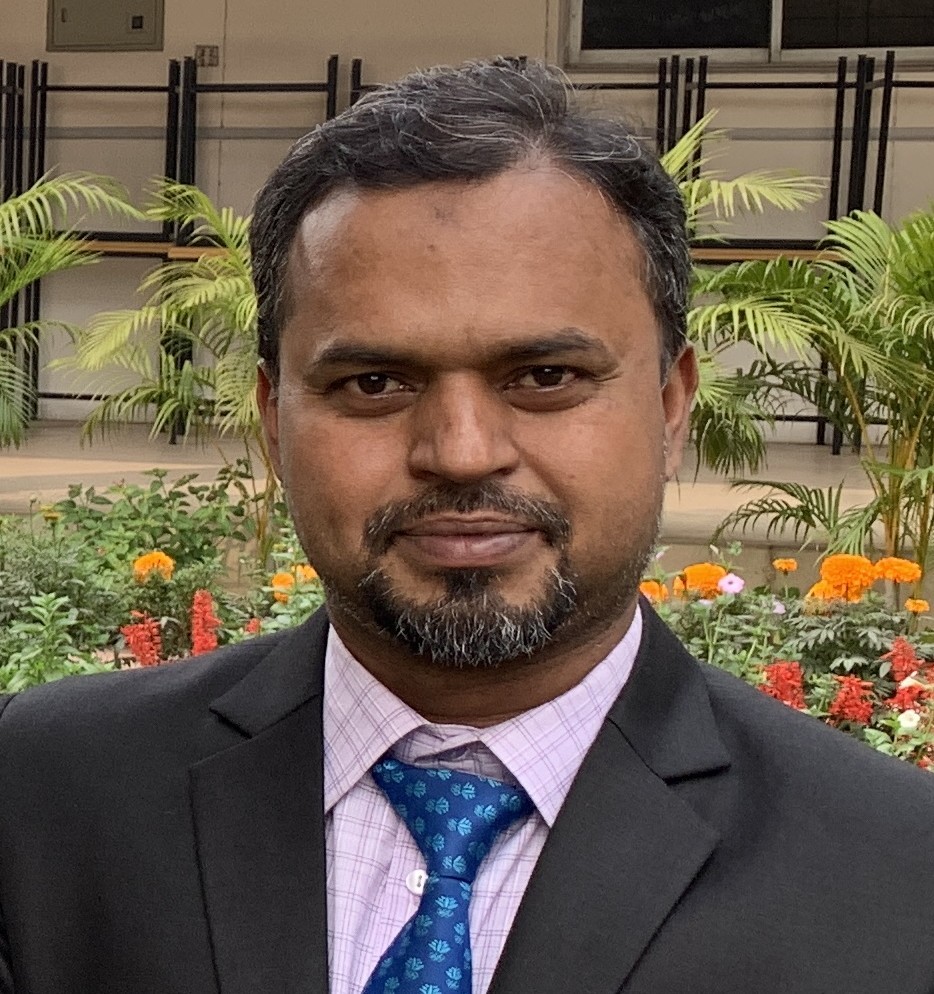
Dr. Zobayer Ahmed
Associate Professor, Bangladesh Institute of Governance and Management (BIGM), University of Dhaka [affiliated]
Email: zobayer.ahmed@bigm.edu.bd (Official); ecozobayer@gmail.com (Regular)
Official Telephone No: +8801837020516

Zobayer Ahmed completed his PhD in economics at Selçuk University, Türkiye, in June 2024. Earlier, he completed a BSS (Hon's) and MSS in economics from Shahjalal University of Science & Technology, Bangladesh. Later, he achieved a Master of Development Studies (MDS) from the University of Dhaka. He started his career as a professional researcher at Unnayan Shamannay, a civil society think tank founded by Prof. Dr Atiur Rahman (former governor of the central bank of Bangladesh). After that, he started his teaching career at Sylhet International University in 2012. From 2014 to 2024, he was a faculty member in the Department of Economics & Banking at the International Islamic University Chittagong, Bangladesh. 

His research area of interest focuses mostly on economic development, social development, the environment and sustainability. Methodologically, he is experienced in quantitative and qualitative analysis. So far, he has published research articles in various journals indexed in SCOPUS and Web of Science. Currently, he serves as an editorial board member of several journals, including Discover Sustainability, published by Springer Nature. He also has experience as a reviewer of journals published by Plosone, Springer, Elsevier, Wiley, Sage, Taylor & Francis, and Emerald. Occasionally, he writes op-eds on social media and in newspapers. For his excellent academic performance, he received scholarships and awards from the Ministry of Education, the Ministry of Primary and Mass Education, the Presidency of Turks Abroad (YTB), the Center for Research and Thought (CRT), and Al Baraka Bank. As a resource person, he chaired 07 academic sessions and delivered 19 keynote speeches in various research, motivational, and training events. So far, he has supervised 27 thesis students at undergraduate and postgraduate levels. Dr Ahmed has presented his research articles at various conferences in Bangladesh, the USA, Greece, Türkiye, Tunisia, South Korea, Malaysia, the Philippines, Thailand, Azerbaijan, and Nepal

Apart from teaching and research, Dr Ahmed has experience in leadership, fundraising, debating, volunteering, and coordinating various academic events (seminars, symposiums, competitions, etc.). 

Education
  • PhD
    Economics, Selcuk University, Turkiye
    2019 - 2024

  • Master of Development Studies (MDS)
    Development Studies, University of Dhaka, Bangladesh
    2010 - 2012

  • Master of Social Sciences (MSS)
    Economics, Shahjalal University of Science & Technology, Bangladesh
    2007 - 2008

  • Bachelor of Social Sciences (BSS)
    Economics, Shahjalal University of Science & Technology, Bangladesh
    2002 - 2006
Professional Experience
  • Assistant Professor
    International Islamic University Chittagong, Bangladesh
    September 2018 - December 2024

  • Lecturer
    International Islamic University Chittagong, Bangladesh
    September 2014 - August 2014

  • Lecturer
    Sylhet International University, Bangladesh
    April 2012 - August 2012

  • Research Officer
    Unnayan Samannay, Bangladesh
    June 2011 - January 2011
Areas of Interest
  • Development Studies
  • Third-sector (NGO Sector)
  • Economic Development
  • Circular Economy
Honors & Awards
  • CRT Research Award
    March 2022

  • Best Speaker Award, SUST Model United Nations
    July 2012

  • National Children Award
    April 1998
Scholarships & Fellowships
  • IIFSO-Vitalen Fellowship for PhD students
    September 2023

  • BEKDER Research Fellowship
    October 2023

  • Merit Scholarship from Presidency of Turks Abroad, based on publications
    September 2022

  • Bereket Foundation Fellowship, financed by Al Baraka Bank
    September 2021

  • Turkey Government Scholarship for PhD Studies
    September 2018

  •  Merit Scholarship from Directorate of Secondary & Higher Education, Ministry of Education, Bangladesh, for outstanding undergraduate performance
    November 2007

  • Primary Scholarship, Ministry of Primary and Mass Education, Bangladesh
    December 1993
Skills
  • Econometric Analysis
  • Bibliometric Analysis
  • Qualitative Research
Publications
Conference & Research Seminar
  • 13th ISTR Asia-Pacific Regional Conference
    The conference theme: Civil Society Organizations (CSOs) play a critical role in sustainability – working towards improving the social and physical environment in development projects and improving opportunities for citizens to live full lives. Recent research highlights innovations in environmental CSOs’ digital practices, how CSOs have empowered communities through novel practices aiming to reduce inequality, and created alternatives to shape new lifestyles and consumption patterns (while preserving cultural and natural heritage), and to solve environmental issues. CSOs are integral to achieving the Sustainable Development Goals (SDGs), often working with governments and for-profit firms to establish goal-oriented networks and cooperations.; April 2025
Op-eds
  • Facilitate trade of raw hides during Eid
    Every year, during Eid ul-Adha in Bangladesh, an economic and bureaucratic crisis unfolds all over the country regarding the prices of raw hides from sacrificed animals. Recently, the minister of commerce sat with the traders and fixed the price of salted cowhide at Tk 62-67 per square foot, with little variation across regional markets and goat skins. Although this price is set to protect the interests of grassroots collectors, rural traders, and charitable institutions, mostly madrasas, the policy often fails, as previous incidents reflect. In reality, rural traders and madrasas do not receive this just price due to buyers' monopsony power, which gives them absolute control over product prices.; 2026-05-19

  • BD eyes an Islamic capital market
    The economic future of any developing nation depends on broadening its financial base beyond bank-dominated, debt-driven growth. In a welcome signal of strategic intent, Professor Dr Rashed Al Mahmud Titumir, Adviser to the Prime Minister on Economic Affairs and Planning, recently called for the establishment of an Islamic stock exchange in Bangladesh — designed to attract capital from Malaysia, Indonesia, and the Gulf, and to create an investment gateway for non-resident Bangladeshis (NRBs). The proposal is timely and ambitious, and it deserves a rigorous answer to a question that policymakers have not yet fully confronted: should Bangladesh integrate Islamic financial instruments into its existing exchanges, or build a separate Islamic capital market from the ground up?; 2026-04-04

  • Economic power of faith in Bangladesh
    In Bangladesh, many people think of Ramadan as a time for spiritual reflection, self-discipline, and community support. Ramadan is important for religious reasons, but it also creates one of the strongest seasonal economic cycles in the country. Bangladesh’s economy changes significantly over about 30 days due to a rise in consumption, trade, travel, and social redistribution.; 2026-03-18

  • Social enterprises in Bangladesh: Bridging gaps or building profits?
    Social enterprises have become crucial in tackling poverty, health, education, and environmental sustainability in Bangladesh. In every society, social business organizations, non-government organizations (NGOs), and various social development initiatives play an essential role in providing services where the market and government have failed to allocate resources efficiently. However, the growing concerns about their commercialization and shifting priorities cannot be ignored. Are the social enterprises genuinely dedicated to their social missions, or are they becoming profit-driven businesses in disguise?; 2026-02-27

  • Bangladesh First: BNP’s path to a winning foreign policy
    ; 2026-02-25

  • Unlocking academic future
    QUALITY education and cutting-edge research have long been the cornerstones of a nation’s progress. In Bangladesh, however, the education sector has often struggled with challenges ranging from resource shortages to a lack of global competitiveness. At the same time, countless Bangladeshi academicians, researchers, and innovators have excelled in institutions abroad, contributing to advancements in science, technology, and education on a global scale. This dual reality underscores a critical question: How can Bangladesh harness the potential of its diaspora to address the gaps in its academic and research landscape?; 1970-02-19
Taught Courses
  • Micreconomics (Undergraduate)
  • Macroeconomics (Undergraduate)
  • Agricultural Economics (Undergraduate)
  • Industrial Economics (Undergraduate)
  • Resource and Environmental Economics (Undergraduate)
  • Public Finance (Undergraduate)
  • Econometrics (Undergraduate)
  • Development Economics (Masters)
  • International Economics (Masters)
Languages
  • Bangla
    Native

  • English
    C1+

  • Turkish
    C1
Experience on Social Welfare
  • Member
    International Society for Third-sector Research (ISTR)
    August 2023 - Till Date

  • Associate Member
    International Society for Development and Sustainability (ISDS)
    April 2018 - Till Date

  • Member
    Universal Peace Federation Alumni Association
    August 2016 - Till Date

  • Team Leader (Bangladesh)
    South Asian Youth Leadership Seminar 2026 (Nepal)
    July 2016 - July 2016

  • President
    Bangladesh Youth Development Initiative- BYDI
    August 2014 - December 2016